Blog

Security Resources


Latest
Blog
Topics

Security Is Changing Fast — Here’s What Today’s Leaders Need to Know

The latest headline is suddenly happening in your neighborhood. Your phone lights up with texts asking: “Are you okay?”

That was the reality many people New York faced in 2025, and it forced companies to confront a hard truth. “It will never happen here” is not a strategy. It’s a blind spot.
 

In their conversation, Rachelle Loyear and Glen Kucera break down what chief security officers and their teams are navigating around the world. Early on, Kucera calls out a mindset that still lingers in many organizations. “Everybody thinks they have no vulnerabilities. They get comfortable with that.” His follow up line sets the tone for everything that comes after. “The day before, they thought it would never happen to them.”
 

From there the discussion widens to what evolving threats actually mean for modern security programs. Threats move fast, so responses must move fast, too. Kucera talks about how roles like hostile surveillance specialists and K9 teams can interrupt an attacker’s focus and buy precious seconds for people to react. “Anything that can deter them or break their train of thought and buy seconds may save the victims.”
 

Loyear brings in an equally important angle. Employees feel more confident when they see their company actively monitoring threats and providing real training. It’s not just protocols on a page. It’s the sense that someone is paying attention and preparing them for what could happen.
The 2025 World Security Report underscores that responsibility even more. Investors believe that about 30% of a company’s value is tied to key executives. Kucera explains why that matters. “There's usually a key executive that maintains the intellectual property of that company… there's an executive that has all the client relationships. There's an executive that builds the culture of the company. And the employees are there because of certain key executives and the mission and what they represent. So, when you take one of them out of the equation, it's tough to measure the full financial impact.”
 

The report also highlights digital risk. Loyear notes that 75% of companies have dealt with misinformation or disinformation, and Kucera adds that growing online hostility has created new challenges for intel teams that now track threats across the open and dark webs.
 

Their discussion circles back to one of the biggest advantages a company can have. Integration. Kucera points out that when teams operate with “one culture and one hiring practice” everything runs smoother and communication becomes clearer. Fewer gaps. Fewer surprises.
They close with the same takeaway. The World Security Report gives CSOs a reality check on what is happening globally and a benchmark for their own programs. As Loyear notes, reviewing plans and practicing them regularly is what exposes gaps before a real incident does.
 

The bottom line: threats are evolving, but companies have more tools and information than ever. Staying ready means staying proactive and treating security as a living part of your business, not something you set and forget.
 

Related Blogs

Strengthening Screening Programs for Today’s Threats

Justin Kelley, Vice President, International Operations 
Allied Universal® Enhanced Protection Services 

Explosives and hazardous devices remain among the most unpredictable and critical risks facing security teams today. In 2024 alone, the U.S. Bomb Data Center logged 353 bombing incidents nationwide — a 10% jump over the prior year. Suspicious packages, deliveries left in executive offices, or unattended bags at public venues can endanger lives, force evacuations, disrupt operations, and tarnish reputations in minutes.

X-ray screening is essential— but it is only the beginning. Spotting an anomaly doesn’t resolve the risk; the real challenge is rapid, accurate resolution. Distinguishing a false alarm from a genuine threat is what keeps people safe and operations running smoothly.  

As adversaries continually refine their tradecraft, organizations must regularly evaluate their screening programs. Here are four areas that can make the difference between disruption and resilience.


1. Speed of Resolution

When a suspicious package or delivery arrives, the clock starts ticking. Screeners scan for red flags such as missing or excessive postage, leaks or stains, unusual odors, protruding wires, or absent return addresses. Spotting anomalies is just step one.  

The real test of a program’s effectiveness is how quickly a team moves from suspicion to resolution. Every minute of uncertainty increases risk — heightening anxiety, disrupting operations, and potentially compounding danger if a true threat is present. Be sure to consider:

  • Is there a clearly defined process for escalating flagged items?
  • How quickly is qualified expertise available to validate or dismiss suspicious items?
  • Could uncertainty trigger unnecessary evacuations that disrupt operations and brand reputation?


2. Expertise to Support the Front Line

Technology alone cannot resolve threats. Qualified expertise is what turns screening into security. Organizations should evaluate who is supporting their screeners and how quickly expertise can be engaged.

Certified bomb technicians represent the gold standard in this area of security. Every U.S. Law Enforcement bomb technician  completes rigorous training at the FBI’s Hazardous Devices School (HDS), the sole national training pipeline. This single-schoolhouse model ensures a consistent foundation of skills, language, and methodology across the field. When these experts assess suspicious images, they draw from their real-world experience with live devices and high-stakes incidents. Organizations tapping resources of this caliber benefit from a broader vantage point and create a force multiplier effect. Think about:  

  • Who supports screeners when uncertainty arises?
  • Are assessments grounded in specialized training and real-world experience?
  • How consistent and defensible are the decisions being made?


3. Training and Continuous Improvement 

Even the best technology is only as strong as the people operating it. Organizations must evaluate both initial and ongoing screener training, carefully considering the evolving threat spectrum.  

Effective programs begin with structured onboarding led by qualified experts. Screeners need confidence in escalation protocols, and the assurance that no concern is “wrong” to raise. Beyond initial instruction, continuous improvement is key. Every flagged image is a learning opportunity, reinforcing cues, sharpening instincts, and boosting decision-making for the next anomaly. This cycle of feedback strengthens instincts, reduces uncertainty, and steadily raises the baseline effectiveness of screening. Programs that neglect this ongoing reinforcement risk stagnation, leaving personnel less prepared to identify subtle, evolving threats. Consider:

  • What training do screeners receive at deployment — and how often is it refreshed?
  • Are escalation protocols clear, and are screeners encouraged to act without hesitation?
  • Does the program include real-time feedback loops that continuously strengthen decision-making?


4. Adapting to Evolving Threats 
 

Threats are not static. Bad actors continuously evolve their tradecraft, drawing on global incidents, new concealment methods, and innovative delivery tactics. What was relevant last year may be obsolete today. A screening program that does not evolve alongside these shifts risks becoming ineffective at the very moment it is needed most.

The most resilient programs are dynamic. They blend technology and human expertise, regularly revisiting protocols, updating training, and leveraging new tools such as machine learning and artificial intelligence to complement—not replace—skilled personnel. This proactive approach helps organizations anticipate rather than react, maintaining strength against both known and emerging threats. Remember to evaluate:  

  • How frequently are screening protocols and training updated to reflect the latest threat intelligence?
  • Does the program incorporate insights from incidents abroad or across industries to stay ahead of copycat tactics?
  • Is the balance between technology and human expertise optimized for adaptability?


The Bottom Line

Screening is a critical layer of any protective strategy – but its true power lies in the combination of speed, expertise, training, and adaptability. Organizations that ask the right questions, continually evaluate their programs, and invest in specialized skills safeguard not just people and assets – but operational continuity and trust.  


About SmartTech®

SmartTech® is a patented solution of Allied Universal® Enhanced Protection Services that connects front-line screeners and their X-ray machines with certified bomb technicians inside a 24/7/365 Emergency Operations Center. With more than 1,200 units deployed in more than 60 countries, SmartTech® delivers rapid resolution — in 90 seconds or less — while reinforcing best practices and quality training through every interaction. By pairing advanced technology with unmatched subject matter expertise, SmartTech® helps organizations strengthen their screening programs and stay ahead of evolving threats. 


Image
Justin Kelley

About Justin Kelley 
Justin Kelley leads Canine and SmartTech operations for Enhanced Protection Services globally. As a 24-year veteran of the Connecticut State Police Department, he served as Commanding Officer/Executive Officer of the Connecticut State Police Emergency Services Unit which was comprised of the Tactical Team, Bomb Squad, Weapons of Mass Destruction Response Unit, Dive Team, Canine Unit, and Aviation Unit. While serving as the Commanding Officer, Kelley was responsible for coordinating the State and Federal response to WMD/Bombing events for the public and private sectors, with the goal of protecting state citizens and assets from injury and damage. As a Bomb Squad commander, he was a member of the Joint Terrorism Task Force. Kelley was  a subject matter expert for the National Center for Security and Preparedness in the area of Advanced Active Shooter and IED Response for First Responders and Investigators. He has also traveled to active shooter sites and met with first responders and survivors from some of this country’s worst active shooter incidents including: Aurora CO, Newtown CT, Tucson AZ, Sikh Temple in Wisconsin, Virginia Tech, Chardon High School, Chardon OH. Justin Kelley is CPP board certified by ASIS

Related Blogs

Staying Safe in the Holiday Rush

How Small Choices Help Protect What Matters Most 

Image
A family of 3 shopping

The holidays always seem to arrive fast. One minute we’re easing into November and the next we’re circling parking lots, juggling bags and trying to cross a dozen things off our lists. 

It’s a busy and exciting time but it can also be when we’re the most distracted. And that’s exactly why safety matters. Allied Universal, doesn’t see holiday shopping as merely a security challenge. We see it as something simple and human: people trying to enjoy the season and get home safely. 

 “Safety isn’t just about reacting,” says Ben Olalde, Vice President of Retail at Allied Universal. “It’s about helping people feel confident and cared for during the busiest time of the year.”
 

Our teams see the reality of holiday shopping every day. The rush, the fatigue, the full hands and the moments when someone needs a little awareness or reassurance. A quick glance toward security, a friendly reminder or a well-lit parking area can change how someone feels and how smoothly their day goes. 


10 Ways to Help Stay Safe While You Shop 

1.    Always be aware of your surroundings.

Look up, stay present and trust your instincts. 
2.    Shop during the day or at slower times when possible.

If you need to shop at night, bring a friend — there’s safety in numbers. 
3.    Don’t shop ‘til you drop.

Fatigue makes you less alert and more vulnerable to hazards. 
4.    Choose retail locations with visible security guards.

A visible presence brings reassurance and helps deter crime. 
5.    Know what to do in an emergency.

Identify exits, safe rooms, alarms and places you can quickly move to if needed. 
6.    Protect your wallet and credit card information, especially in line to pay.

It’s one of the easiest ways to prevent identity theft or card fraud. 
7.    Consider how much you’re buying and how you’ll carry it.

Overloaded hands can distract you and limit your mobility. 
8.    Park in well-lit areas and allow extra time in crowded lots.

Bright, open spaces make it easier to stay aware. 
9.    Never leave valuables, bags or gifts visible in your vehicle.

Even brief visibility can invite break-ins. 
10.    If you feel unsafe, act quickly.

Leave the area, find a safe place to hide or defend yourself if there’s no other option. 
 

Image
A crowded shopping mall image

These aren’t just safety tips — they’re small, thoughtful choices that help protect your time, your belongings and your peace of mind. 
 

At the End of the Day, It’s About People 
 

Holiday shopping isn’t really about the items. It’s about the people behind them. Everyone deserves to feel safe while doing something as simple as picking out a gift. Whether you’re navigating crowded aisles, making late-night gift runs, or returning to your car under holiday lights, Allied Universal is committed to helping protect what matters most: people. Move with confidence. Make the small choices that help create safer moments. 
 

Related Blogs

Detection Dog Spotlight: Alexander Kapsopoulos and K9 Ziva

In the heart of Philadelphia where busy city streets meet historic neighborhoods, K9 Ziva is always on alert alongside her partner, Alexander Kapsopoulos. Together, they’re part of nearly 1,000 Allied Universal® Enhanced Protection Services Detection Canine Teams working globally to safeguard people, property, and critical operations.

Image
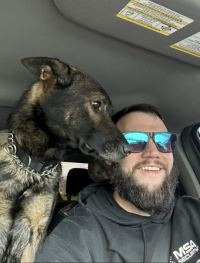
Man with a dog


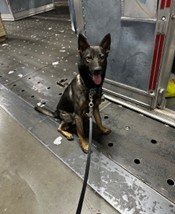
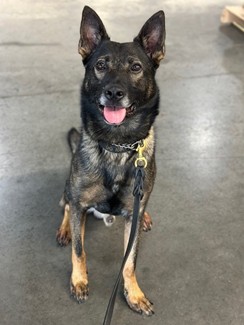
Each day, Alexander and Ziva conduct proactive sweeps for explosives, respond to security calls, and provide reassurance to the clients they serve. A five-year-old Belgian Malinois, Ziva pairs high drive with precise control—a combination that makes her both approachable and all business when it’s time to work.

“Don’t let her friendly face fool you—Ziva is all business on duty,” Alexander says. “The moment the leash goes on, she locks in with me and we’re ready to get to work as partners.”


From Law Enforcement to K9 Handling

Like all handlers in the Allied Universal Enhanced Protection Services network who carry either military or law enforcement backgrounds, Alexander built a career grounded in service and accountability. His law enforcement background spans more than a decade, including time as a Police Sergeant with the Department of Commerce in Washington, D.C. and as a campus officer at a major university in Philadelphia. Early in his career, he served as an Animal Cruelty Investigator with the New Jersey SPCA, handling cases of neglect, abuse, and illegal dogfighting—many of which overlapped with narcotics and gang activity.  
 

Image
Man with a dog


“I’ve always had a passion for animals and for helping people,” he explains. “Becoming a K9 handler was the perfect way to bring those two worlds together. Working with Ziva gives me a real sense of purpose—every day we’re doing something that matters. It’s challenging, but it’s also incredibly rewarding. I couldn’t ask for a more driven partner or a more fulfilling mission.”  

When he learned of an opportunity to join Allied Universal’s Detection Canine Program, Alexander didn’t hesitate. While training with Ziva at one of the company’s many regional training centers, the two quickly bonded with shared drive and energy. The team completed their explosives detection certification through Allied Universal’s nationally recognized program, which uses real explosive compounds and rigorous independent third-party assessors to validate accuracy in the field. “From the start, it felt like a great match—we’re both high-energy and ready to go at a moment’s notice.” 

Image
Image of a dog

Protecting with Purpose

Today, Alexander and Ziva cover a wide area across the greater Philadelphia region, supporting a network of financial institutions with both proactive and rapid-response operations. Their daily work reflects the full spectrum of threat mitigation—from preventive sweeps before executive visits to real-time response when concerns arise on site.  

Alexander’s background in law enforcement and crisis intervention brings additional strength to the team. He’s trained to assess risk quickly, de-escalate tense situations, and communicate clearly under pressure. “We might visit five sites in a day, sometimes more,” he says. “Other days, a single call can take several hours as we work through a plan. It’s never the same day twice—that’s what keeps us sharp.” Years of experience in emergency response have honed his ability to read situations and defuse them with steady control. “You learn to stay calm no matter what’s happening,” he adds. “People feed off your energy, and when they see you’re composed, it helps bring the situation down a notch. Having Ziva there helps too—she commands respect just with her presence.”

Ziva’s precision and reliability are the perfect complement. Trained exclusively for explosives detection, she operates with unwavering focus and accuracy. “She loves people and she’s incredibly social, but when it’s time to work, she switches gears instantly,” Alexander says. “You can see her whole posture change. She’s tuned in.” 

Image
Two dogs

Life Beyond the Leash 

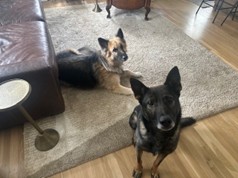
Off duty, Alexander’s home life is as full as his workdays. He and his wife are raising four children along with two other dogs: Blue, an Alaskan Husky, and Huggy, a Shepherd-Husky mix. “It’s a full house,” he laughs. “But the dogs all get along great. Ziva’s got a calm side once we’re home—she curls up under the bed like it’s her cave.”

When he’s not working, Alexander enjoys spending time with his family, traveling, and photography. “Ziva’s even photogenic,” he says. “She’s a great model when she sits still long enough.”

Through every call, sweep, and long drive across the city, one thing remains constant: the bond between handler and canine. “Ziva gives her all every single day,” Alexander says. “She’s my partner, my backup, and my best teammate. I couldn’t ask for more.” 


Related Blogs

Staying Ready When It Matters Most

A Conversation with John Bernal, Senior Director, Operations

Disaster and Emergency Response | Allied Universal® Enhanced Protection Services 


When emergencies strike—whether sudden wildfires, large-scale events, or workplace threats—organizations need security partners who can move quickly, adapt seamlessly, and protect people and assets under pressure.

We sat down with John Bernal, Senior Director of Operations for the Disaster and Emergency Response (DER) team at Allied Universal® Enhanced Protection Services, to talk about what drives successful deployments and how layered security solutions make the difference in high-stakes environments. 


John, can you begin by sharing more about your role and team’s expertise?

I oversee the temporary and emergency response side of DER—anything short-term or urgent that requires specialized protection. That ranges from a single officer on fire watch to complex deployments involving armed agents, executive protection, and crowd management. We also handle natural disaster responses, workplace violence incidents, large-scale events, and secure transports. Essentially, if a client needs tailored security for days, weeks, or even months, my team builds and delivers that solution. If we need to engage with other practices within our organization to help build out the security program, we do. These might include Investigations, Executive Protection, Consulting, Intelligence, and K9 Detection.  


One of the deployments your team managed recently was a multi-day flagship conference.  What was unique about that environment?

The challenge with events like that is the mix of high-profile attendees, valuable assets, and huge crowds that span across multiple zones with numerous access points. You can’t rely on a single layer of security—it has to be a coordinated, multi-practice approach. For that deployment, we brought together several security functions: risk assessment and tactical planning, weapons detection screening, K9 units for explosives and firearms detection, and an executive protection detail. A unified command center and real-time communication with local law enforcement helped tie it all together.

That layered model allowed us to manage everything from counterfeit badge attempts to crowd incidents, while also creating a visible sense of safety for attendees. It’s a good example of how different service lines integrate to provide one seamless security solution.


On the other end of the spectrum, your team delivered support to the communities impacted by the California wildfires. How does a disaster response differ from an event deployment?

The environment is completely different—unpredictable, fast-moving, and emotionally charged. In that case, we were asked to secure bank branches with damaged vaults, protect insurance offices, and escort claims adjusters into hazardous neighborhoods. With local resources stretched thin, our ability to mobilize and scale quickly was critical.

We deployed retired law enforcement officers who not only provided protection but also had strong local relationships, which gave us access and credibility in restricted areas. We also layered our coverage: unarmed guards where visibility mattered most, armed agents for higher-risk sites, and active law enforcement coordination when needed. That adaptability is what allowed us to help protect assets and help businesses keep operating during the evolving crisis.


From your perspective, what are some of the common denominators for success across such different scenarios?

Adaptability and depth of resources. You must be able to scale quickly, pivot when something unexpected happens, and layer security appropriately. Sometimes that means more officers for visibility, other times it’s fewer people with higher-level expertise. What matters is having the right mix at the right time.

It also comes down to planning and partnerships. Success comes from working as one unified team—and that can be internally within our various specialty practices or externally with local law enforcement. And of course, the people—the professionalism, training, and calm under pressure—that’s the engine that makes it all work.


You mention the strength of the team. How does your team’s background—many coming from military or law enforcement—help in these situations?

It makes a big difference. Prior military personnel are used to operating in austere environments, with limited resources, and staying steady under pressure. Former law enforcement bring experience in dealing with the public, de-escalating situations, and managing incidents in real time. Together, those backgrounds create a balance—discipline and adaptability on one hand, communication and situational awareness on the other. It means when we send people out, they’re not just standing watch. They’re actively problem-solving, bringing intelligence back, and helping us shape a stronger solution for the client as conditions change.


What does this tell us about the broader value of DER services?

At the end of the day, organizations need more than bodies at a site. They need trusted professionals who can protect people, property, and operations no matter the environment—planned events, sudden disasters, or emerging threats. 

The value is in the layers: tailoring the right mix of expertise, technology, and personnel to the situation at hand. That flexibility, and the ability to integrate across practices, is what makes us effective when it matters most. 


About John Bernal 
John Bernal is Senior Director of Operations for Allied Universal® Enhanced Protection Services, where he leads the company’s Emergency Response Center and oversees threat, disaster, and emergency response deployments nationwide. A U.S. Army veteran, John brings extensive experience from both the public and private sectors, including leadership in protective services, behavioral threat assessment, and crisis operations.

He holds the ASIS International “Triple Crown” of certifications — Certified Protection Professional (CPP), Physical Security Professional (PSP), and Professional Certified Investigator (PCI) — as well as the Certified Threat Manager (CTM) credential from the Association of Threat Assessment Professionals. John also played a key role in designing Allied Universal’s internal credentialing program for ERC operators, raising the standard for readiness across the team.

Before entering private security, John served as a Parole Agent III Supervisor, where he oversaw high-risk caseloads and advanced behavioral threat assessments. Today, he continues to shape the field through active involvement with ASIS International, including contributions to certification programs and technical committees on workplace violence prevention and active assailant response. 

Related Blogs

Detection Dog Spotlight: Oscar Mejia and K9 Iris

Northern California is known for its tech trailblazers, but not all high-performance teams work behind a screen. On any given day, you might spot a lean, athletic yellow Labrador racking up miles across a sprawling, high-security site—her nose in overdrive, her focus locked in. Meet K9 Iris and Program Manager and Handler Oscar Mejia of Allied Universal® Enhanced Protection Services.

Image
Man with a dog


As Program Manager for a high-profile client, Oscar oversees a uniquely scaled firearms and explosives detection program spanning nine critical sites across North America. He and Iris are part of a global network of more than 1,000 Allied Universal detection canine teams deployed to protect environments where people, assets, and infrastructure demand the highest level of security.  


A Mission-Ready Mindset

Oscar’s role blends frontline precision with behind-the-scenes leadership that suits his background well. In addition to working alongside three-year-old Iris, he manages performance, contract compliance, and evolving site protocols, acting as the primary liaison for both internal teams and the client. It’s a complex, high-stakes environment that demands both field acumen and business fluency—qualities Oscar brings through a strong foundation in military service and formal business education, including an MBA and bachelor’s degree in business.

“As a program manager, I’m developing system solutions and supporting processes that enable our dogs and handlers to succeed every day,” Oscar explains. “We never compromise on quality. The bar is always high because our clients expect excellence, and so do we.” 

Image
A military jet on the runway

A veteran of the U.S. Air Force and California Air National Guard, Oscar served as a weapons load crew member for the A-10 “Warthog,” supporting deployments to Iraq and Afghanistan. The experience sharpened his leadership instincts and instilled a mission-first mindset grounded in discipline, readiness, and execution. Those same principles now shape his approach to canine operations—helping him lead with precision, purpose, and a commitment to quality on every front.


Iris: Athlete, Partner, Force Multiplier

She’s fast. She’s focused. And she’s one of the most capable detection dogs in the field. At just three years old, K9 Iris already demonstrates the discipline, endurance, and drive of a seasoned pro. “She’s built to work,” Oscar says. “You can see it in the way she moves. Her energy is purposeful. She knows exactly what she’s here to do.” 

Image
A person sitting on stairs with two dogs


Iris is dual certified as an Explosives Detection Canine (EDC) and Firearms Detection Canine (FDC)—a distinction that elevates her impact in the field. All Allied Universal FDC dogs begin with the same foundation: real-world training on actual explosive compounds. They imprint and train on all five families of military and commercial-grade explosives, as well as high-risk homemade threats like TATP and HMTD.

From there, dogs like Iris undergo additional imprinting to identify the unique chemical signatures associated with firearms. Whether the weapon has been discharged or is completely static, she is trained to alert with precision—and without disrupting the surrounding environment. This specialized skillset makes her ideally suited to complex, high-traffic settings where subtlety and accuracy are essential. But it’s not just training that drives results. It’s trust.

Oscar and Iris operate as a seamless unit, sweeping sprawling indoor and outdoor environments every day and logging countless steps. Their communication is nearly invisible, built on repetition, intuition, and mutual respect. “She’s incredibly responsive and we understand each other,” explains Oscar. “That kind of bond doesn’t happen overnight. You build it by showing up—together—every single day to do good work.”


Life Beyond the Leash

When the shift ends, Iris heads home with Oscar, where the pace slows and she shares her downtime with Oscar’s retired partner, Laka. 

Image
Two dogs

“At work, Iris is nonstop. At home, she settles right into our more laid-back routine—at least for a while,” Oscar says. “She’ll nudge you for attention, stretch out for a nice nap, then be back on her feet, ready for a good game of tag. She definitely enjoys her downtime, but she doesn’t sit still for long.”

Oscar isn’t one to sit still either. A dedicated runner and marathoner, he loves being outdoors—and even when he is not training for a race, he often heads out for a quick jog with Iris trotting at his side and Laka cheering from the sidelines. “Laka used to run with me, but at nine years old, she’s earned the privilege of lazier days at home,” Oscar says. “Iris has taken the baton, and she never lets me skip a workout.” 

Related Blogs

With its towering evergreens, snow-capped peaks and rugged coastline, the Pacific Northwest is known for producing explorers, innovators and standouts who thrive in demanding environments. Among them is Allied Universal® Enhanced Protection Services’ Detection Canine Team Mack Pruitt and Audi.

In the high-stakes world of security, trust, precision and vigilance are essential—qualities that brothers Chris and Jessie Sevillano bring to their work every day as Allied Universal® Enhanced Protection Services. Explosive Detection canine handlers deployed in the Los Angeles area, these seasoned professionals and their dedicated canine partners are among more than 1,000 company teams nationwide helping to protect public safety.

In one of the largest office buildings in Manhattan—home to thousands of employees and buzzing with daily activity—security is a nonstop mission. From sleek conference spaces to bustling communal lounges, every floor is designed for innovation, collaboration and connection. But behind the scenes, helping to ensure a safe environment for all is a team that never stops moving: Allied Universal® Enhanced Protection Services’ Detection Canine Team Carlos Figueroa and his three-year-old yellow Labrador, Betty.

The fatal shooting of UnitedHealthcare CEO Brian Thompson in Midtown Manhattan on December 4, 2024, sparked urgent discussions among organizations about the safety of their executives. Rising anti-capitalist sentiment, amplified rhetoric and increasing protest activity against corporate America continue to heighten the risks for high-profile leaders, especially within the healthcare, pharmaceutical and financial industries.

There's Security in our Solutions