Blog

Security Resources


Latest
Blog
Topics

Detection Dogs in Modern Security: How Canine Teams Complement Technology Like X-ray and AI

Q&A with Chris Shelton, Vice President, Air Cargo at Allied Universal® Enhanced Protection Services


In enterprise business environments, a successful security program is not determined based solely on the number of solutions deployed, but by how well the overall program addresses real-world risks and vulnerabilities. In dynamic environments like cargo facilities, corporate campuses, and public venues, threats rarely present themselves at predictable checkpoints. Risks shift across space, time, and operational workflows. Organizations must design layered, flexible programs that adapt as conditions change.

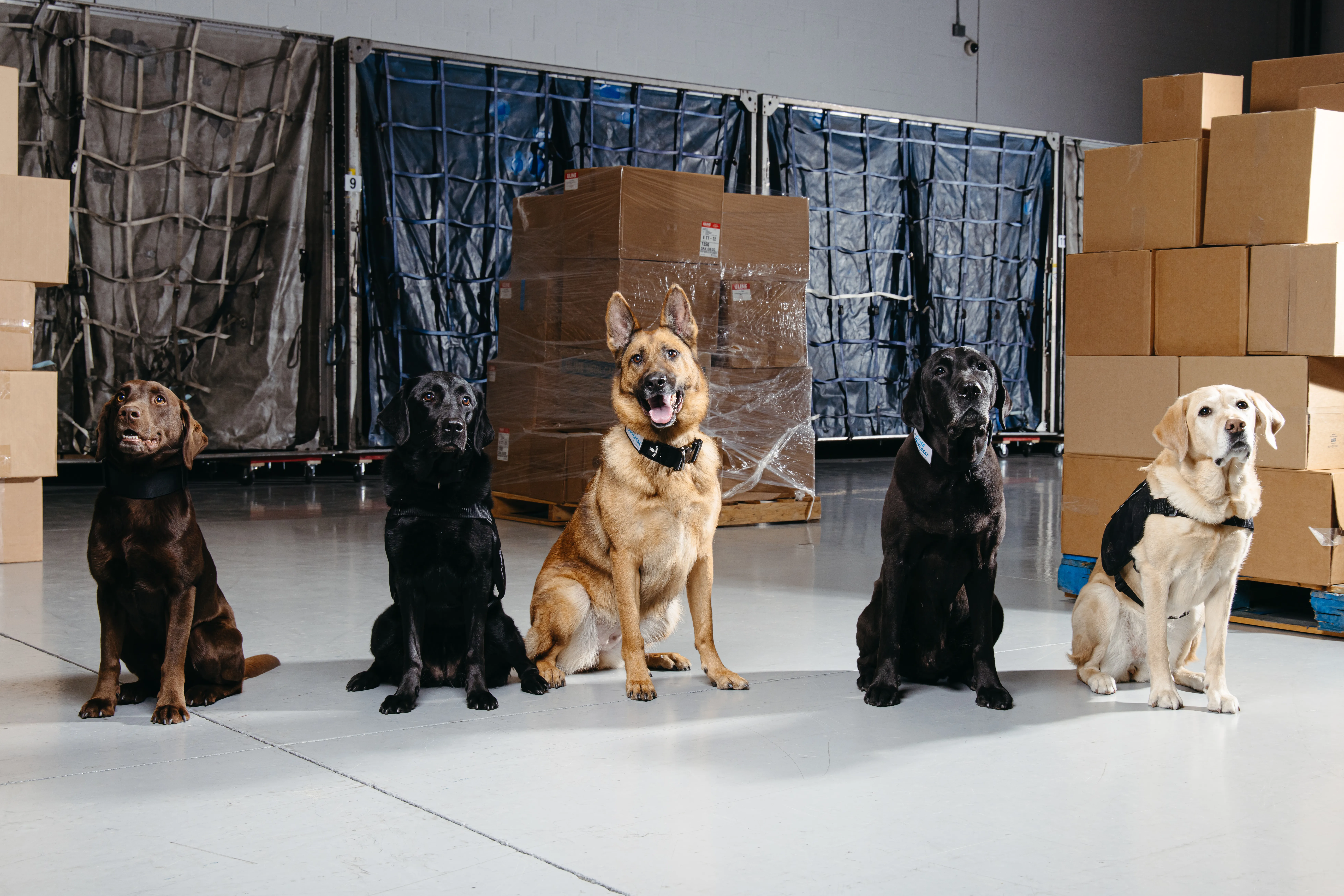
Detection dogs continue to play a critical role in modern security programs because they introduce mobility and adaptability that fixed systems cannot replicate. When integrated into a robust program, canine teams expand screening capabilities, support faster resolution, and help maintain operational continuity.

Chris Shelton, Vice President, Air Cargo at Allied Universal® Enhanced Protection Services explains how canine teams fit into a modern, layered approach to security.


With so much focus on AI and advanced screening technology, why do detection dogs still matter?


Most organizational environments are dynamic. Technology is typically deployed at defined checkpoints, but risks are not always so predictable.

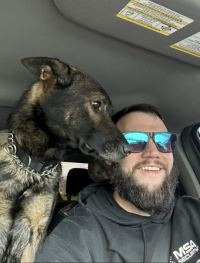
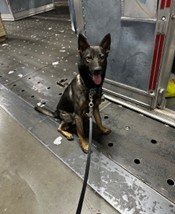
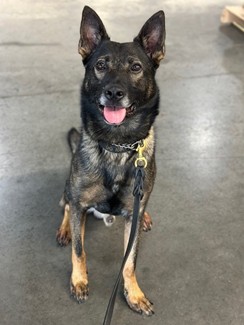
Canine teams are able to move across a facility and apply detection where it is needed in real time. This extends screening beyond fixed locations and allows organizations to identify potential risks earlier—before a person, vehicle, or package reaches a more sensitive area.

For security leaders, that shifts coverage design from fixed entry points to distributed detection aligned with operational flow.


What do canine teams add that technology often cannot?
 

Adaptability under real-world conditions.

If the threat landscape shifts, canine teams can be retrained to address a new threat profile in a relatively short period of time—something not always feasible with fixed detection systems. This versatility becomes exponentially more powerful when considered alongside the canine’s mobility. Once trained on the new threat, they can be repositioned within the facility as vulnerabilities.

I would also note that their presence influences behavior, much more so than other security solutions. Hostile actors have become desensitized to camera systems, access control, and even security personnel. Yet they still hesitate around a canine, especially when they are not sure what type of work that canine is trained to conduct. In many environments, this deterrence factor contributes to risk reduction before an incident ever develops.
 

How do detection dogs and X-ray complement each other in practice?


Threats do not always appear where screening is concentrated. Incidents such as the Manchester Arena bombing reinforced the importance of extending detection beyond fixed checkpoints into the broader operating environment. Like most venues, the arena had screening in place during entrance, but none in place during egress; this vulnerability was exploited with devastating consequences and the entire industry realized they needed to adjust overnight. A mobile canine team can adjust to these requirements in real time as concerns evolve. It would be expensive and infeasible to achieve these same results with technology. 

Air cargo illustrates this well. Canine teams can screen cargo significantly faster than X-ray or explosive trace detection, helping move volume without creating bottlenecks. More than 350 Allied Universal teams are individually TSA certified for these environments, demonstrating how this model operates at scale.

The advantage is not just speed — it is how efficiently a program moves from detection to resolution without disrupting operations. A canine alert does not have to trigger a shutdown. Through our patented Advanced Alarm Resolution process, the item can be routed to X-ray, reviewed through our SmartTech® platform by certified bomb technicians, and resolved in about 90 seconds. The handler coordinates with client stakeholders according to established escalation protocols, enabling a consistent, defensible response.

This is how layered security systems function best: canine teams expand coverage and flexibility, while technology and remote expertise provide the depth needed to resolve uncertainty.

Supporting tools reinforce that process. Our K9-Comply® platform captures screening data in real time, reducing manual workload while maintaining compliance and audit readiness.


What kinds of threats are organizations asking canine teams to address today?


The scope has expanded. While explosives detection remains central, organizations are increasingly adding firearms detection and, in some environments, narcotics detection.

This reflects a broader shift in risk mitigation. Rather than focusing on a single threat, organizations are evaluating how multiple threats could impact operations, safety, and reputation — and seeking capabilities that can adapt accordingly.

Canine teams are effective in this environment because they detect trace amounts of odor, including residual odor that may remain even when an item is concealed, vacuum packed, or surrounded by distracting odors.


What should security leaders evaluate when considering a canine program?


Program discipline is critical.

This includes handler standards, training methodology, certification processes, and how performance is validated over time. Strong programs are defined not just by training, but by consistent performance under real-world operating conditions.

In regulated environments such as air cargo, this also includes alignment with federal requirements, third-party testing, and structured oversight to help ensure performance is both effective and compliant.

The most effective programs align canine teams, technology, and daily workflows. When those elements support each other, organizations can close gaps, respond with less disruption, and maintain consistency as conditions change.


The Bottom Line


Detection dogs are not an alternative to technology — they extend it.

Programs that integrate canine teams with X-ray, AI-supported workflows, and remote expertise gain flexibility and depth, allowing organizations to screen more effectively, respond more quickly, and maintain continuity.

For security leaders, the objective is not to choose between capabilities, but to design a system where each component strengthens the overall security posture.


About the Expert


Chris Shelton is a 17-year veteran with the Federal Air Marshal Service (FAMS), a United States federal law enforcement agency under the supervision of the Transportation Security Administration (TSA) of the United States Department of Homeland Security (DHS).  During his tenure with FAMS, Mr. Shelton served as the Supervisory Air Marshal in Charge of the TSA Canine Training Center. He supervised canine team training for the largest explosive detection canine program in DHS and was responsible for training, deploying and evaluating over 1,000 TSA and law enforcement-led canine teams for aviation, multimodal, maritime, mass transit and cargo environments. Mr. Shelton was instrumental in the development and implementation of the Certified Cargo Security Program – Canine (CCSP-K9), the TSA program regulating the use of third-party canine providers for explosive detection screening in regulated air cargo environments. With a long-time passion for security and explosive detection canines, Mr. Shelton began his career with a decade of service as a municipal law enforcement officer.


Related Blogs

Risk-Based Executive Protection: A Strategic Framework for Today’s Security Challenges

Image
two people walking


Executive protection remains a core pillar of organizational safety strategy, especially in complex and evolving threat environments. But protection is not simply about assigning agents or establishing routines. Truly effective executive protection must be grounded in a risk-based approach, aligning security measures with the unique needs, goals, and risk profile of the individual or organization.
 

What Is Risk-Based Executive Protection?
 

At its core, risk-based executive protection is about understanding risk holistically and designing protective policies and procedures that directly support organizational and personal safety objectives. This approach goes beyond standard protection models by looking at threat likelihood, potential impact, and the broader context in which executives and high-profile personnel operate.

When protection strategies are built solely on assumptions or reactive measures, they can create a false sense of security and fail to address root causes of risk. In some cases, improperly applied protection can even escalate a situation or divert focus from the actual threat drivers.
 

Why a Risk-Based Approach Matters
 

A risk-based model helps ensure that executive protection:


●    Aligns with business goals by supporting organizational priorities and mission-critical functions

●    Identifies and assesses real risk based on likelihood, impact, and relevance

●    Allocates resources effectively through scalable and adaptable protection strategies

●    Addresses the human element through education, communication, and cultural integration


Balancing Protection With Broader Strategy
 

Executive protection can take many forms including physical detail, cybersecurity measures, and travel security. Each plays a role in mitigating different types of risk. The goal of a risk-based executive protection strategy is to balance these elements while supporting operational objectives rather than hindering them.

Security metrics also play a critical role. Tracking performance over time allows organizations to evaluate effectiveness and make informed improvements instead of relying solely on intuition or static checklists.
 

Building a Strong Protective Culture
 

A strong executive protection program recognizes that security does not exist in isolation. It must be embedded across the organization with clear roles, shared awareness, and collaboration across teams such as HR, operations, legal, and technology.

A security-aware culture reduces vulnerability by encouraging proactive awareness and reinforcing that protection is a shared responsibility.
 

Adaptive Protection for a Changing Risk Landscape
 

Threat environments evolve quickly, and static protection programs can lose relevance. Risk-based executive protection must be agile, regularly reviewed, and adjusted to reflect new intelligence, emerging threats, and organizational change.

This adaptability is what separates resilient protection programs from those that simply meet baseline expectations.
 

How Allied Universal Enhanced Protection Services Can Help
 

Allied Universal Enhanced Protection Services helps organizations design and implement executive protection programs rooted in risk-based analysis. By aligning people, intelligence, and strategy, we support protection programs that evolve with the threat landscape and the needs of today’s leaders.


Contact Us


Related Blogs

Lessons From Recent Global Incidents: How Threat Actors Keep Changing the Game


By Ashley Heimerl, Senior Intelligence Analyst
Allied Universal® Enhanced Protection Services


Over the past several decades, violent extremists and hostile actors have adjusted tactics and tradecraft to evade detection and maximize the impact of incidents. In today’s evolving threat landscape, organizations must rethink their approach with proactive preparation in mind. The challenge is not only deciding whether security is needed; it is building a plan that still holds when attack methods shift.
 

The ‘How’ Keeps Expanding


The history of counterterror research illustrates how quickly the tactics and tradecraft of threat actors can evolve and spread. This type of copycat behavior is referred to as contagion or diffusion. Once a tactic is proven to be effective, low-cost, hard to stop, and highly visible, the unfortunate reality is that it tends to spread rapidly across ideologies, geographies, and targets. Groups that otherwise have nothing in common may adopt tactics that appear effective to achieve their own ends. For security leaders, this makes it vital to stay up-to-date on threat trends, quickly identifying and implementing preventive strategies that reduce specific areas of risk and exposure. Let us consider a few recent examples. 
 

Transit Attacks


The 1995 Tokyo subway sarin attack, leading to 13 deaths and 5,800 injuries, was a key flashpoint in the evolution of terrorist tactics. Japanese cult Aum Shinrikyō released the highly toxic nerve agent on multiple train lines converging in central Tokyo. Law enforcement was caught off-guard by these incidents, which demonstrated a civilian capacity to develop and deploy military-grade weapons along with the successful exploitation of crowded, soft-target environments. Threat actors across ideologies have since targeted commuter transit systems in attempts to inflict catastrophic damage. The Madrid train attacks in 2004 left 191 dead and 1,800 injured, and the London transit attacks in 2005 resulted in 52 casualties and 770 injuries. These tactics continue to challenge law enforcement and security systems in more recent years as shown in the 2016 Brussels airport and metro bombings, the 2017 St. Petersburg Metro attacks, and beyond. Security leaders have been working diligently to increase security efforts across transit systems to combat this ongoing threat. 
 

Complex Coordinated Attacks 
 

The 2008 Mumbai attacks have been studied as one of the first examples of a complex coordinated terrorist attack. Threat actors used a mix of firearms and explosives to conduct a series of coordinated attacks against soft targets throughout the city. They remained active, coordinated, and mobile, causing chaos and confusion for law enforcement and first responders. These tactics were later observed in the 2013 Nairobi Westgate Mall attacks which lasted four days, the 2015 Paris attacks, and other plots that have been successfully preempted. These shocking events indicate that smaller businesses and soft targets are just as vulnerable to exploitation as prominent, symbolic targets. Security at these sites cannot be overlooked. 
 

IoT & AI-Enabled Threats 


A newer example of evolving tactics involves new vulnerabilities via the Internet of Things (IoT) and Artificial Intelligence (AI). In a recent non-violent incident, a French software developer discovered a significant vulnerability while attempting to connect his vacuum to a PS5 remote using Claude Code AI. In doing so, he discovered he was able to remotely access 7,000 robot vacuums across 24 countries with the ability to control the devices remotely, view camera feeds, listen to onboard microphones, and generate floor plans of homes thousands of miles away. While he alerted the manufacturer to the security flaw and it has since been addressed, the incident highlights potential vulnerabilities malign actors could exploit, not just at home, but in public spaces as well. Experts believe hostile actors are already evaluating how to leverage AI technology to inflict catastrophic physical harm. The Department of Homeland Security has pointed to the use of AI for targeted radicalization efforts, surveillance, training, and even attack planning. 
 

Drone-Related Threats


Drones are being increasingly leveraged to cause damage. Thus far, this has mainly been limited to overseas warcraft, such as with the Ukrainian-Russian conflict, but the potential for contagion into civilian spaces is beginning to emerge. Drones can be used for delivery of weapons into secure areas, such as sports stadiums, reconnaissance and surveillance of potential targets, and other harmful purposes. In November, 2024, an individual in Tennessee was arrested and charged for attempting to use a drone laden with explosives to attack an energy facility. His goal was to shut down substantial portions of the power grid, impacting critical infrastructure, such as hospitals, without power. Security leaders must pay close attention to this emerging threat vector, and how their security programs can be modified to mitigate new vulnerabilities. 
 

The Takeaway


For business and organizational leaders, the takeaway is not to fixate on any single threat; it is to recognize the pattern and anticipate the evolution. Threat actors move quickly, and tactics can be copied, tweaked, and repeated in new places. The practical challenge for organizations is the diversity of threats. A security plan built around one scenario is likely to fall short. When considering the broad spectrum of concerns across the threat landscape, it becomes clear: preparedness works best when it focuses on behaviors and impacts rather than trying to predict a single type of event.
 

Where Intelligence Fits in the Plan


When discussing security measures, most people picture access control, cameras, personnel, and procedures. But intelligence is what helps those measures stay current, enabling a shift to a proactive security stance, rather than a reactive one. Intelligence empowers security leaders with answers to key questions such as:


  • What is happening around us right now? Local events, protests, and crime patterns that can affect risk.
  • What is being said online that could affect us? threatening social media posts or direct messages are red flags, but negative or even misinformation about an organization can also drive unwanted attention.
  • What could impact our security posture? Holidays, religious occasions, or high-profile incidents can influence copycat behavior and timing.
     

This is not about predicting the future. It is about reducing blind spots so organizations can make informed, measured decisions at critical moments, tighten an entry policy, adjust staffing, update security protocols, or coordinate earlier with law enforcement when a threat appears credible.


Threat tactics will keep evolving—sometimes in predictable ways, sometimes not. Organizations do not need to forecast every event to improve preparedness. They benefit from a flexible plan, facilitated by timely intelligence, and grounded in practical operational practices. This holistic approach helps teams respond with clarity as the threat landscape continues to evolve.


About Ashley Heimerl: 


Ashley is a Senior Intelligence Analyst with Allied Universal® Enhanced Protection Services, where she supports executive protection operations through strategic intelligence analysis and threat monitoring. She has eight years of private-sector intelligence experience supporting clients across multiple industries. Ashley holds a Master of Arts in International Security with High Honors from the University of Arizona, where she focused her research on counterterrorism dynamics in Africa and the Middle East. Her work centers on analyzing complex threat environments, assessing emerging security trends, and providing strategic insights to support informed decision making. Ashley brings a deep understanding of geopolitical drivers, extremist networks, and regional instability, leveraging her expertise to support mission critical intelligence and security initiatives.
 

Related Blogs

A Guide to Workplace Violence Prevention

Image
three people walking in formal suite


Workplace violence is a serious concern for organizations across every industry. Beyond immediate safety risks, incidents can disrupt operations, impact morale, and create long-term reputational challenges. A proactive workplace violence prevention strategy helps organizations reduce risk while fostering a culture of safety, awareness, and accountability.

Effective prevention requires more than reacting to incidents. It involves understanding risk factors, recognizing early warning signs, strengthening communication, and preparing teams with clear response protocols.
 

Why Workplace Violence Prevention Matters

Workplace violence prevention is not just a compliance requirement. It is a business priority that supports employee well-being, operational continuity, and stakeholder confidence. Organizations that invest in prevention often experience stronger reporting cultures, faster response times, and greater overall resilience.

Incidents rarely occur without warning. In many cases, behavioral indicators, communication breakdowns, or unresolved conflicts provide opportunities for early intervention.
 

Understanding Workplace Violence Risk

To build a strong workplace violence prevention program, organizations must first understand the different forms risk can take and where vulnerabilities may exist. Risk does not look the same in every environment, which is why awareness is critical.
 

What Is Workplace Violence?

Workplace violence can range from subtle threats to serious physical harm. It may involve employees, customers, contractors, or visitors. While the severity varies, even minor incidents can signal deeper organizational risk.

Workplace violence may include:

  • Verbal threats or intimidation
  • Harassment or aggressive behavior
  • Physical altercations or assaults
  • Escalating interpersonal conflicts

Recognizing the broad scope of workplace violence helps organizations avoid underestimating potential warning signs.
 

Common Misconceptions About Workplace Violence

One common misconception is that workplace violence only affects certain industries such as healthcare or retail. In reality, risk exists anywhere people interact under stress, deadlines, or high expectations. Prevention should be considered across all business environments, not just those traditionally viewed as high risk.
 

Recognizing Early Warning Signs

A strong workplace violence prevention strategy includes educating teams on how to identify behaviors that may indicate elevated risk. These indicators do not automatically predict violence, but they provide opportunities for support and early intervention.

Behavioral and Emotional Indicators

Changes in behavior are often among the first visible signals. 

These may include:

  • Sudden personality shifts
  • Increased hostility or agitation
  • Emotional distress or visible frustration
  • Withdrawal from colleagues or leadership

When organizations encourage employees to report concerns early, these signals can be addressed constructively.
 

Workplace and Environmental Indicators

Risk can also surface through patterns in performance or workplace dynamics. 

Organizations should monitor for:

  • Escalating interpersonal conflicts
  • Frequent complaints involving the same individuals
  • Increased absenteeism tied to unresolved tension
  • Lack of clear reporting or communication channels

Addressing these issues early strengthens overall workplace violence prevention efforts.
 

Building a Workplace Violence Prevention Strategy

Prevention requires a structured, organization-wide approach. Policies alone are not enough. Successful programs integrate communication, leadership alignment, training, and response planning.
 

Develop Clear Policies and Expectations

Workplace violence prevention should begin with clearly documented policies that define unacceptable behaviors and outline reporting procedures. These policies should be easily accessible and reinforced regularly.

Strong policies typically:

  • Define prohibited conduct
  • Explain how to report concerns
  • Clarify investigation procedures
  • Outline accountability measures

Clarity reduces uncertainty and helps employees understand expectations.
 

Provide Ongoing Training for Employees and Leaders

Training plays a critical role in prevention. When employees know how to recognize warning signs and respond appropriately, organizations reduce the likelihood of escalation.

Effective training programs cover:

  • Identifying behavioral indicators
  • De-escalation techniques
  • Reporting processes
  • Emergency response procedures

Regular reinforcement helps keep prevention top of mind.
 

Establish Safe and Accessible Reporting Channels


Workplace violence prevention depends on employees feeling safe when raising concerns. Organizations should provide multiple reporting options and reinforce non-retaliation policies.

This may include:

  • Anonymous reporting systems
  • Dedicated HR or security contacts
  • Clear escalation pathways
  • Follow-up communication protocols

A transparent reporting culture increases early detection and reduces risk.
 

Strengthening Response Preparedness

Even the strongest prevention programs must include response planning. Preparation supports teams in acting quickly and confidently if a situation arises.

Organizations should develop documented response plans that outline:

  • Lockdown or evacuation procedures
  • Emergency communication methods
  • Coordination with external responders
  • Post-incident review processes

Conducting drills and tabletop exercises helps reinforce readiness and reduce confusion during real incidents.


How Technology Supports Workplace Violence Prevention

Technology can enhance both prevention and response when used strategically. While tools alone do not eliminate risk, they provide valuable visibility and coordination.

Organizations may leverage:

  • Video monitoring systems to increase situational awareness
  • Access control systems to restrict unauthorized entry
  • Mass notification tools for rapid communication
  • Incident tracking platforms for documentation and review

When integrated effectively, these systems strengthen workplace violence prevention efforts by improving visibility and coordination.


Leadership’s Role in Workplace Violence Prevention

Leadership commitment is one of the most important drivers of prevention success. Employees are more likely to report concerns and follow protocols when leaders consistently reinforce safety as a priority.

Leaders should:

  • Model respectful behavior
  • Communicate expectations clearly
  • Encourage open dialogue
  • Support proactive intervention

When prevention becomes part of organizational culture, risk mitigation becomes more sustainable.


Continuous Improvement in Workplace Violence Prevention

Workplace violence prevention is not a one-time initiative. It requires ongoing evaluation and refinement.

Organizations should regularly:

  • Review incident data
  • Update training programs
  • Assess policy effectiveness
  • Gather employee feedback

Continuous improvement helps organizations adapt to evolving risks and maintain strong prevention practices.
 

Conclusion: Taking a Proactive Approach to Workplace Violence Prevention

Workplace violence prevention requires awareness, preparation, and leadership commitment. By recognizing early warning signs, strengthening communication, establishing clear policies, and preparing teams with response protocols, organizations can reduce risk and build safer work environments.
A thoughtful, comprehensive approach keeps prevention an active, integrated part of daily operations — not just a reaction to incidents.


Contact Us


Related Blogs

Detection Dog Spotlight: Jacob Wichman and K9 Ricsi

In a high-volume airport cargo environment, the work moves in a steady rhythm. Packages come in, get sorted, and head back out. In the middle of it all is Ricsi, a German-Shepherd Malinois mix trained in explosive detection, and his handler, Jacob Wichman.

Image
Man with a dog

A K9 team working as part of Allied Universal® Enhanced Protection Services, their role is simple to describe and hard to do well: stay ready, stay consistent, and help support a safe cargo operation every day. Together, they are locked in on the job, working as a team to help keep packages secure before they move on to their next destination. 

Ricsi uses his nose to screen freight and packages for specific odors that may indicate a threat. Jacob, a former U.S. Army artilleryman and Transportation Security Administration (TSA) officer, guides Ricsi through search patterns, keeps him under tight control in a fast-moving work area, and watches for small changes in his body language that can signal a credible alert. If Ricsi flags an item, Jacob follows site-specific protocols so the right people can take a closer look, resolving the alarm or confirming the presence of a threat.

What sets Ricsi apart is his ability to shift seamlessly between high energy and focused precision—slowing down, working methodically, and staying locked in even as activity increases around him.
Jacob describes Ricsi as a “wild man” full of energy, but he also knows how to keep his focus on the task at hand. “When he’s finding what he needs to find, he slows down and becomes very methodical,” Jacob says.

Every detection dog has a drive that keeps them searching. For Ricsi, Jacob says the biggest reward is the work itself. That attitude shows up the moment they arrive on the job. Jacob starts each shift at 4 p.m. the same way, giving Ricsi time to settle in and get focused. As the night moves along and the operation picks up, Ricsi shifts into high gear, getting excited because he knows he has a task to complete, Jacob says.
 

Training That Keeps Ricsi Sharp  

Discipline, consistency, and strong procedures have been the cornerstones of Jacob’s career path from the military to the security field, and he intends to impart those principles on Ricsi as well. Ricsi’s performance on duty is tied to training outside the active work.

Image
Image of a dog

“Training is daily,” Jacob says. “We follow company standards, and I always meet or exceed the minimum requirements.”

But effective training doesn’t have to be monotonous. In fact, it’s better for Ricsi if the training style varies. Jacob changes Ricsi’s routines to keep him vigilant and reliant on his nose. “I constantly move training aids and vary their placement—different heights, depths, and environments—so Ricsi never gets complacent,” Jacob says. “Dogs are smart. If you do the same thing repeatedly, they stop using their nose and start patterning.”

Jacob also works with Ricsi at home on search types and scenarios they don’t always see during a normal shift. “At home, we work on open-area searches, vehicle searches, and scenarios we don’t typically encounter at work,” Jacob says. “It’s all about repetition, consistency, and keeping him honest.”


Trust Built Over Time

Image
Image of a dog

A strong bond between handler and canine takes time to develop. Jacob says the connection with Ricsi grew as they trained, traveled, and worked side by side. There was no single moment that cemented their relationship, Jacob says.

“But about six months into the job, I felt very confident and connected with him,” he adds.

Ricsi also makes it clear he likes being close to his person. “If I’m more than five feet away from him, he lets me know,” Jacob says.

That closeness carries into their professional relationship, too. “We travel together frequently for training. He’ll climb up and lean into me like he’s giving me a hug. He’s my buddy. I spend more time with him than anyone else.”

Off Duty, Ricsi Is a Different Dog

Image
Two dogs

But when he’s off duty, Jacob says he is calm and content at home. “He’s a completely different dog,” Jacob says. “At home, he’s a big couch potato. He’ll sit at my feet, hang out on the couch, or just relax until I open the door to go outside.”
Jacob says Ricsi loves being outdoors, and he’s the kind of dog who wins people over quickly. “Everyone who meets him loves him,” Jacob says. “He’s friendly, loving, and a big goofball.”

Why Their Work Matters 

Jacob says this role feels different because he gets to do meaningful work with a partner he trusts. He adds that this job has tapped into his true passion in life.
“The work matters, and I get to do it with my best friend,” Jacob says.

Ricsi brings drive, focus, and heart to every shift. Jacob brings steady training, patience, and pride in the work. Together, they are the kind of team you want in a place where details matter and consistency is key.
 

Related Blogs

The Science Behind a Dog’s Nose


By Michael Wynn, Allied Universal® Enhanced Protection Services Director of Canine Training

You walk into the kitchen, listening to all the usual sounds it produces: a burner clicks, water hums, a spoon scrapes the side of a pot. Then, the air changes and you lift your nose. To you, the sudden aroma is simple: spaghetti sauce. One smell, one label. A dog experiences the same moment differently. The “sauce” is not one thing but an amalgamation of unique scents. Tomato, onion, garlic, herbs, and oil—each ingredient has its own unique, invisible aromatic thread.  

That ability to separate scents into their parts is the starting point for understanding why canine security teams remain such a valued tool in explosives detection work, especially in complex spaces like cargo and freight operations, loading docks, and busy commercial buildings. 

Image
Canine with a handler

Smell Is a Dog’s Primary Data Stream


For dogs, scent is a sophisticated data stream, constantly updated and deeply detailed. Their system is built to gather detailed scent information and process it quickly.

  • More receptors to capture more signals. Dogs are estimated to have more than 100 million scent receptors in the nasal cavity compared to about 6 million in people.

  • More surface area to read the air. Dogs have 17 times more smell-detecting tissue than humans.

  • More brainpower devoted to odor. The area in a canine’s brain used to analyze scent is about 40 times larger than the comparable area in humans.

Some estimates show dogs can detect smells anywhere from 1,000 to 10,000 times more accurately than people. And dogs sample scent actively. Research that models canine sniffing often uses rates of several sniffs per second, helping the dog constantly refresh its palette.
 

Why This Matters in Cargo, Freight, and Commercial Spaces


Real environments are messy. Cargo and freight spaces carry overlapping odors: cardboard, plastics, fuel, lubricants, cleaning products, food, perfumes, and constant airflow from doors and vehicles. Buildings and venues add their own mix—lobbies, elevators, mailrooms, loading areas, open-air spaces, and corridors where scents travel in unpredictable ways.

This is where the pasta sauce analogy becomes practical. A well-trained detection dog can work through layers. The aim is not for the dog to react to a strong smell—but to recognize a specific odor signature through the scent layers. 

That capability can support security needs such as:

  • Cargo and freight: screening pallets, containers, and staging areas where items move quickly and storage conditions change

  • Vehicles and loading docks: checking entry points where goods and people share the same flow paths

  • Commercial spaces: supporting security programs in lobbies, mail and package areas, and other high-traffic zones

The dog is never working alone. A canine security team is a partnership in which the dog reads the environment, and the handler reads the dog. The handler watches for changes in the dog’s behavior that may indicate a credible alert, then follows established site procedures to report concerns and help coordinate next steps.


Training Keeps the Nose Useful


Scent detection is based on repetition, clarity, and consistency.

Canine programs build a dog’s “odor library,” teaching the dog to distinguish relevant odors from background scent. Over time, that library expands as the world changes. As threat profiles evolve, training programs adapt by introducing new target odors in controlled conditions while keeping the safety of the dog and handler at the center of the work.

Scale matters, too. Allied Universal® Enhanced Protection Services operates the largest private-sector canine security program, with over 1,000 teams assigned globally. That reach supports consistent standards across regions and helps clients integrate canine screening into broader security planning, whether the setting is a distribution operation or a multi-tenant commercial building.

Canine detection is applied biology paired with training discipline, used in places where speed, mobility, and adaptability matter.

In the end, the value comes back to that kitchen moment. Humans smell the sauce. Dogs smell what the sauce is made of. In cargo, freight, and commercial environments—where odors overlap and stakes are high—that difference can help support safer operations and help reduce risk, one careful sniff at a time.


About Michael Wynn: Michael Wynn is a retired Connecticut State Trooper who was a Master Trainer and lead instructor for the Connecticut State Police canine program. He has over 35 years of experience training police work dogs and is certified by the New England State Police Accreditation Committee. While working with the Connecticut State Police, he led a task force commissioned by the Department of State to create an EDC Anti-Terrorism Assistance Program to protect at-risk State Department locations worldwide.  He is certified as an expert witness in both State and Federal court on matters relating to police work dogs.  He is one of the foremost authorities on police working dogs and has spoken on behalf of the Bureau of Alcohol, Tobacco, Firearms and Explosives (ATF) and the United States Police Canine Association on many occasions. He previously served on the Department of Homeland Security’s advisory panel for the Explosives Standards Working Group. This panel is drafting a set of national standards for bomb dog training and operations. He is a member of the International Association of Bomb Technicians and Investigators.

Related Blogs

Civil Unrest Security Planning: How Businesses Can Prepare for an Unpredictable Risk Environment

Image
Cop car with lights


Civil unrest continues to be a growing concern for organizations across industries. From peaceful demonstrations that escalate unexpectedly to riots, vandalism, and targeted acts of violence, unrest can disrupt operations with little warning. Political polarization, economic pressure, labor disputes, and social movements all contribute to an environment where businesses must be prepared for disruption, not surprised by it.

Effective civil unrest security planning is no longer optional. It is a core component of business resilience, continuity, and duty of care. 


Why Civil Unrest Poses a Real Business Risk


Civil unrest can affect organizations of any size, from local storefronts to global enterprises. The impact often goes beyond physical damage and can include:


●    Property damage and theft

●    Employee safety concerns

●    Supply chain interruptions

●    Temporary or prolonged facility closures

●    Revenue loss and reputational risk


In more severe cases, a lack of preparation can result in long term operational setbacks or force difficult decisions about relocation, staffing, or service availability.
 

A Proactive Approach to Civil Unrest Security Planning


Organizations that manage risk effectively take a forward looking approach rather than reacting in the moment. Civil unrest security planning should be integrated into broader risk management and resilience strategies.
 

Key components include:
 

Conduct a Comprehensive Risk Assessment


Start by identifying potential drivers of unrest that could affect your locations, workforce, or operations. This includes evaluating geographic exposure, proximity to high traffic or symbolic areas, past incident patterns, and emerging social or political tensions. A structured risk assessment helps prioritize resources and informs decision making before an incident occurs.
 

Develop a Clear Contingency and Response Plan


A well defined response plan outlines what actions to take before, during, and after unrest. This may include access control procedures, temporary shutdown protocols, employee safety guidance, evacuation routes, and coordination with local authorities. Plans should be flexible enough to adapt as situations evolve.
 

Strengthen Communication Channels


Clear communication is essential during periods of uncertainty. Employees, customers, and partners should know how to receive updates, where to go for guidance, and what actions are expected of them. Consistent messaging helps reduce confusion, supports safety, and maintains trust.
 

Secure Facilities and Assets


Physical security measures play a critical role in civil unrest security planning. This may include enhanced perimeter protection, monitored surveillance, controlled entry points, and visible security presence. These measures help deter opportunistic threats and provide greater situational awareness.
 

Protect Data and Critical Systems


Operational disruptions often extend beyond physical spaces. Organizations should plan for secure access to systems, data backups, and continuity of critical functions if facilities become temporarily inaccessible. Cyber and physical security planning should work together, not in isolation.
 

Stay Informed and Monitor Developments


Timely intelligence allows organizations to adjust posture before conditions escalate. Monitoring credible news sources, local alerts, and intelligence feeds helps leaders make informed decisions and shift resources proactively.
 

Turning Preparation Into Resilience


Civil unrest cannot always be prevented, but its impact can be managed. Organizations that invest in civil unrest security planning are better positioned to help protect their people, limit disruption, and recover faster when incidents occur. Preparation builds confidence across leadership teams and helps maintain stability during unpredictable moments.
 

How Allied Universal Can Help


Allied Universal specializes in helping organizations strengthen readiness through a comprehensive, risk based approach to security and resilience. Our integrated solutions help identify vulnerabilities, align people and technology, and support organizations in building plans that adapt to real world conditions.

By combining intelligence, security professionals, and strategic planning, we help organizations move from reactive response to sustained preparedness. When it comes to mitigating these situations, it’s crucial that you choose the right security provider.

Contact us to learn more about how we help organizations strengthen civil unrest security planning and build long term resilience. 


Contact Us


Related Blogs

K-12 School Safety Tips Every Campus Should Know

Safety is one of the most important responsibilities of K-12 leadership. 

Image
school and college students

Families trust schools to provide an environment where students can focus on learning without unnecessary risk or disruption. Whether it is the first day of school, a return from winter break, or the middle of a busy semester, safety must remain consistent, intentional, and visible.
 

Strong school safety programs are not built on one solution or one policy. They are built through planning, awareness, communication, and partnership. These K-12 school safety tips are designed to help school administrators and leadership teams strengthen preparedness, improve response capabilities, and build a culture where safety is understood and shared across the entire campus.


Know Your Environment Through Risk Assessment


Effective school safety starts with knowing your campus. Every school has its own layout, traffic patterns, and community dynamics that shape risk. A thorough risk assessment allows leadership teams to move from assumptions to informed decisions.

This includes reviewing:

●    Physical vulnerabilities such as unsecured doors, isolated hallways, or blind spots

●    Student movement during arrival, dismissal, and class transitions

●    Community activity around the campus

●    Past incidents or near misses
 

Risk assessments should be ongoing, not one-time events. As campuses grow, change, and adopt new programs, risks evolve as well. Regular assessments help schools prioritize investments, strengthen weak points, and stay proactive rather than reactive.ve.


Design Thoughtful Access and Entry Controls


Knowing who is on campus and why is a cornerstone of school safety. Access control is about structure, not restriction. It allows schools to create a predictable environment where activity is easier to monitor and manage.

Strong access practices include:

●    Limiting open entry points during school hours

●    Using visitor check-in systems with visible identification

●    Positioning trained staff or security professionals at main entrances

●    Establishing procedures for deliveries and contractors

When access control is implemented thoughtfully, it helps protect students and staff while maintaining a welcoming school atmosphere.


Maintain Strong Facility Awareness and Surveillance


Situational awareness depends on both people and technology. Cameras, monitoring systems, and access tools provide visibility, but awareness is strengthened when staff understand what normal activity looks like and recognize when something feels out of place.

Schools should focus on:

●    Strategic camera placement in high-traffic and sensitive areas

●    Clear lines of sight in hallways and common spaces

●    Staff presence during peak movement times

●    Regular review of monitoring procedures

The goal is early detection. The sooner unusual activity is noticed, the more options a school has to respond calmly and effectively.


Train Staff and Students on Safety Protocols


Safety plans are only effective if people understand them. Training gives staff and students confidence to take action when needed.

Training should include:

●    Emergency procedures for different types of incidents

●    How to report concerns or suspicious behavior

●    How to respond to lockdowns, evacuations, and shelter-in-place orders

●    Age-appropriate guidance for students

When training is clear and consistent, it reduces hesitation, confusion, and panic during real situations.


Build Strong Communication Channels


Communication is one of the most powerful tools in school safety. Clear, timely information builds trust and helps maintain order during uncertainty.

Strong communication systems include:

●    Rapid alert tools for staff, students, and families

●    Defined roles for who communicates during emergencies

●    Consistent messaging about safety expectations

●    Post-incident updates that provide clarity and reassurance

Schools that communicate well create confidence and stability even in high-stress moments.


Plan for Both Safety and Well-Being


Safety is not only physical. Emotional and social well-being are deeply connected to campus security. Many risks begin as behavioral or social concerns long before they become incidents.

Schools should integrate:

●    Counseling and mental health resources

●    Behavioral intervention teams

●    Programs that encourage belonging and inclusion

●    Early reporting systems for concerns

Supporting well-being reduces escalation and strengthens overall campus stability.


Engage Students, Staff, and Families in Safety Culture


Safety is strongest when it is shared. When students, staff, and families feel ownership of safety, awareness increases and response improves.

Engagement can include:

●    Student safety ambassadors or leadership programs

●    Staff participation in planning and review sessions

●    Family education on safety procedures and communication systems

This collaboration builds trust and reinforces that safety is everyone’s responsibility.


Establish Clear Emergency Response Plans


Every campus should have documented procedures for a wide range of scenarios. 

These plans should define:

●    Lockdown, evacuation, and shelter processes

●    Reunification procedures

●    Leadership roles during emergencies

●    Coordination with first responders

Plans must be accessible, practical, and easy to follow. Complexity creates confusion, while clarity supports action.


Practice Regular Drills and Exercises


Drill exercises help take plans and make them muscle memory. They reveal gaps, strengthen coordination, and help people feel prepared rather than fearful.

Effective drills:

●    Are communicated clearly ahead of time

●    Include debriefs afterward

●    Are adjusted based on age and setting

●    Improve realism without creating stress

Drills should always support learning and confidence.


Review and Evolve Your Safety Strategy


School safety is not static. Threats change. Technology advances. Campus needs evolve.

Leadership teams should regularly:

●    Review safety incidents and feedback

●    Update emergency plans

●    Evaluate technology and staffing needs

●    Refresh training programs

Continuous improvement keeps safety programs relevant and effective.
 

Why These K-12 School Safety Tips Matter


School safety is not about checking boxes. It is about creating environments where students feel supported, staff feel prepared, and families feel confident.

Strong safety programs help protect more than buildings. They support learning, relationships, and trust. When leadership takes a proactive, thoughtful approach to safety, campuses become places where education and security work together, not in tension.

These K-12 school safety tips provide a framework for schools to build programs that are practical, human-centered, and ready to adapt to whatever challenges the future brings.
 

How Allied Universal Supports K-12 School Safety
 

Allied Universal partners with schools to help protect students, staff, and campuses through a combination of people, planning, and technology. We support schools in strengthening their safety programs by helping assess risk, improve access practices, enhance situational awareness, and refine emergency response planning.

Our approach focuses on collaboration, preparedness, and communication, helping schools build safety programs that are consistent, adaptable, and aligned with their unique environments.


Contact Us


Related Blogs

Detection Dog Spotlight: Katie Crews and K9 Duke

At one of the busiest air logistics hubs in the Midwest, handler Katie Crews and her explosive detection partner, K9 Duke, work with a silent, steady purpose.

Image
Katie Crews and Duke

At one of the busiest air logistics hubs in the Midwest, even the night shift moves fast. Aircraft move in and out, tugs pull cargo containers across vast ramps, and millions of packages flow through illuminated conveyor belts. In the middle of this nonstop motion, handler Katie Crews and her explosive detection partner, K9 Duke, work with a silent, steady purpose. Together, they support one of Allied Universal® Enhanced Protection Services’ most demanding aviation deployments, bringing precision, focus, and consistency to a complex operational environment. 

For Duke, a black lab and seasoned detection canine, everything begins the moment Katie puts on her uniform. “He knows it’s go time,” Katie says. “He locks in with me right away. Once we step on site, he’s all business.” 

A Path Built on Service 

Katie’s path to the detection canine field was shaped by years of service. Before joining Allied Universal® Enhanced Protection Services, she spent four years as a police officer and 10 years with the Kentucky National Guard. Service, movement, and meaningful work have always defined her career. 

“I’ve always been drawn to roles with a mission behind them,” she says. “I’m not someone who can sit behind a desk. I want to be active, engaged, and doing something that matters.” 

When she transitioned out of law enforcement, working with a detection canine offered the right mix of mission, mobility, and responsibility — and she embraced it wholeheartedly with the encouragement of her family. 

Fuschia and Duke: A Bond Shaped by Loyalty

Image
Izzy the Schnauzer & Retired K9 Fuschia

Katie’s story with Enhanced Protection Services began before Duke entered the picture. Her first explosives detection canine was Fuschia, a black lab whose loyalty and steady work ethic made a lasting impact. Katie and Fuschia worked together for more than a year before Fuschia was diagnosed with cancer — news that was incredibly difficult for Katie, given the bond they had built through long nights, training, and shared purpose. 

With guidance from the canine management team, Katie supported Fuschia through retirement and helped her transition into life at home by her side where she continues to enjoy her days. 

As Katie prepared to begin a new chapter in her handler journey, she returned to the Enhanced Protection Services training center, where she was paired with her next partner, Duke. From the start, the two shared an easy rhythm — Duke’s drive matched Katie’s pace, and his confidence in the field made him a natural fit for the demands of aviation screening. 

Their bond strengthened quickly. “He’s got such a good heart,” Katie says. “He wants to work, he wants to be with me, and he gives everything he has every single night. Once we connected, that was it — we were in this together.” 

Precision in a High-Tempo Aviation Environment 

Image
Duke

Working in a large, dynamic air cargo operation brings a slew of challenges. The environment is massive, loud, and always in motion. Between aircraft movements, ground support equipment, belts powering up and down, and Unit Load Devices (ULDs) filled with thousands of packages, detection teams must remain focused and adaptable. 

“We screen a huge amount of cargo,” Katie explains. “Between the planes, the tugs, and the volume, it’s a fast-paced environment. Good communication is everything. Everyone works together because the mission depends on it.” 

Every night, Katie and Duke screen ULDs that contain international shipments, supporting aviation safety and cargo integrity. Duke’s steady focus makes him a natural fit for the environment. “He thrives in structure,” she says. “He tunes out distractions and stays locked in. That’s what makes him such a strong working partner.” 

Training, Readiness, and the Power of Instinct 

Training is at the core of every detection canine’s success. Enhanced Protection Services emphasizes practice, consistency, and preparedness. In addition to monthly and quarterly testing, Katie and Duke complete daily training exercises. 

Like all EPS handlers, Katie discreetly hides a training aid in the environment and instructs Duke to “seek” until he locates the source of the odor. This not only keeps Duke’s nose in tune, but it gives Katie a meaningful opportunity to read subtle changes in his behavior, strengthening their working bond. 

“Daily training keeps the dogs sharp, and it keeps us sharp as handlers too,” Katie says. “You’re only as good as your tool, and when your dog is squared away, you will be too.” 

A Moment That Made an Impact

One of Katie’s proudest moments came during a high-visibility evaluation where Duke was asked to perform in an unfamiliar environment under close observation. Despite the pressure, he worked the area with total confidence and precision. 

"He worked that site like he’d been there for years,” Katie says. “Seeing him shine like that made me incredibly proud. He represented all of us.” 

Off-Duty Moments 

Image
Duke

Off the clock, Duke’s demeanor shifts completely. The focused, all-business detection canine becomes relaxed, affectionate, and full of personality. 

Like all Enhanced Protection Services’ working canines, Duke lives at home with his handler, along with retired K9 Fuschia and Izzy, Katie’s pet Schnauzer. “Duke fits right in,” Katie says. 

“He’s the sweetest pup. When we’re home, he flips the switch and he’s just part of the family. He loves being with our other dogs and relaxing after a long night.” 

Serving with Purpose 

For Katie, detection work is more than just a job — it’s a continuation of the commitment to service that has defined her path. Every night, she and Duke help support the safety of aircraft and people far beyond the perimeter of the cargo hub. 

“I came here to serve the community, and in this role I’m still doing that — just in a different way,” she says. “If we can prevent something from getting onto a plane, we’re protecting a lot of people. That gives me a real sense of purpose.” 

Through every shift, Katie and Duke bring discipline, partnership, and precision to a mission that depends on all three.

Related Blogs

Security Is Changing Fast — Here’s What Today’s Leaders Need to Know

The latest headline is suddenly happening in your neighborhood. Your phone lights up with texts asking: “Are you okay?”

That was the reality many people New York faced in 2025, and it forced companies to confront a hard truth. “It will never happen here” is not a strategy. It’s a blind spot.
 

In their conversation, Rachelle Loyear and Glen Kucera break down what chief security officers and their teams are navigating around the world. Early on, Kucera calls out a mindset that still lingers in many organizations. “Everybody thinks they have no vulnerabilities. They get comfortable with that.” His follow up line sets the tone for everything that comes after. “The day before, they thought it would never happen to them.”
 

From there the discussion widens to what evolving threats actually mean for modern security programs. Threats move fast, so responses must move fast, too. Kucera talks about how roles like hostile surveillance specialists and K9 teams can interrupt an attacker’s focus and buy precious seconds for people to react. “Anything that can deter them or break their train of thought and buy seconds may save the victims.”
 

Loyear brings in an equally important angle. Employees feel more confident when they see their company actively monitoring threats and providing real training. It’s not just protocols on a page. It’s the sense that someone is paying attention and preparing them for what could happen.
The 2025 World Security Report underscores that responsibility even more. Investors believe that about 30% of a company’s value is tied to key executives. Kucera explains why that matters. “There's usually a key executive that maintains the intellectual property of that company… there's an executive that has all the client relationships. There's an executive that builds the culture of the company. And the employees are there because of certain key executives and the mission and what they represent. So, when you take one of them out of the equation, it's tough to measure the full financial impact.”
 

The report also highlights digital risk. Loyear notes that 75% of companies have dealt with misinformation or disinformation, and Kucera adds that growing online hostility has created new challenges for intel teams that now track threats across the open and dark webs.
 

Their discussion circles back to one of the biggest advantages a company can have. Integration. Kucera points out that when teams operate with “one culture and one hiring practice” everything runs smoother and communication becomes clearer. Fewer gaps. Fewer surprises.
They close with the same takeaway. The World Security Report gives CSOs a reality check on what is happening globally and a benchmark for their own programs. As Loyear notes, reviewing plans and practicing them regularly is what exposes gaps before a real incident does.
 

The bottom line: threats are evolving, but companies have more tools and information than ever. Staying ready means staying proactive and treating security as a living part of your business, not something you set and forget.
 

Related Blogs

There's Security in our Solutions®