Contact Us


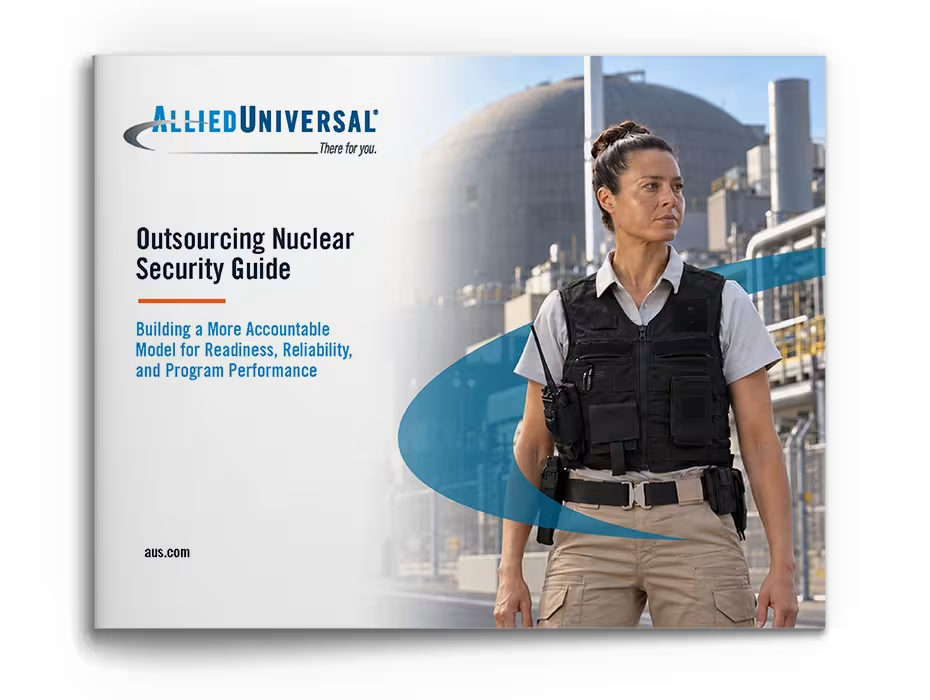
Strengthen Nuclear Security Readiness and Accountability
Nuclear security programs balance readiness, workforce demands, technology reliability, and accountability. This guide helps leaders evaluate:
Download the guide to identify priorities and plan next steps.
Download our Nuclear Security Guide
What’s In the Guide
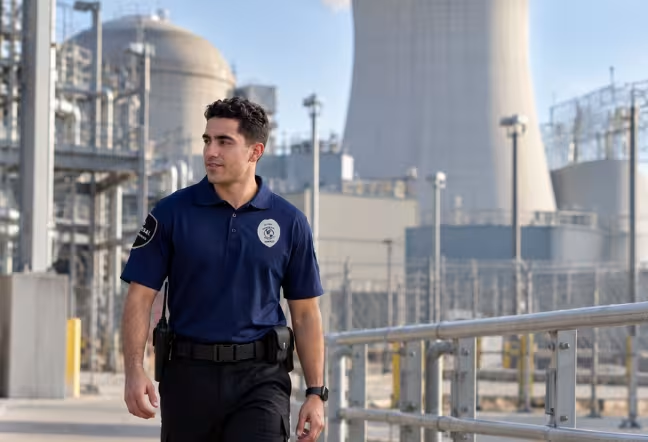
Build a More Accountable Security Program

Evaluate Nuclear Security Operating Models

Strengthen Workforce and Technology Readiness
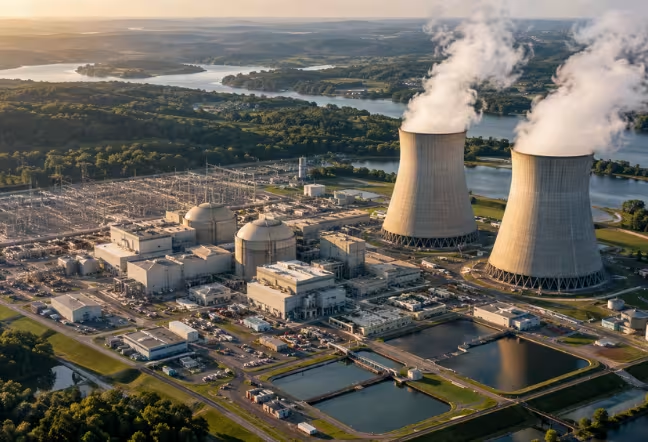
Use the Nuclear Program Self-Assessment
Who’s The Guide For
Evaluate the operating disciplines that shape readiness in a regulated, high-consequence environment. The guide connects workforce qualification, Force-On-Force preparation, supervisory performance, labor continuity, technology reliability, documentation, and governance. Use the included self-assessment and partner evaluation questions to identify priorities, frame executive discussions, and build a phased improvement plan tied to site security requirements and operating conditions.
Gain a clearer view of nuclear security as an operating model, not only a staffing expense. The guide examines total program value, administrative burden, accountability, risk transfer, and the tradeoffs among owner-managed, full contract, limited hybrid, and total solutions models. It helps executive sponsors evaluate which structure best supports readiness, cost visibility, and long-term program performance.
Understand how security readiness connects to plant operations, outages, maintenance periods, staffing continuity, and emergency response. The guide highlights practical dependencies across training, post readiness, contingency force planning, procedures, technology workflows, and documentation. It provides a framework for assessing whether the current security model can adapt to changing site needs without adding avoidable operational burden.
Review the technology and governance factors that support dependable nuclear security operations. The guide covers alarm assessment, video, access control, intrusion detection, system health, testing, lifecycle planning, obsolescence, vulnerability notification, and operator workflow. It also gives procurement, risk, and EHS&S stakeholders a structured way to evaluate partner capabilities, accountability, modernization priorities, and long-term support requirements.
Related Resources
World Security Report 2026
Why Allied Universal