Contact Us


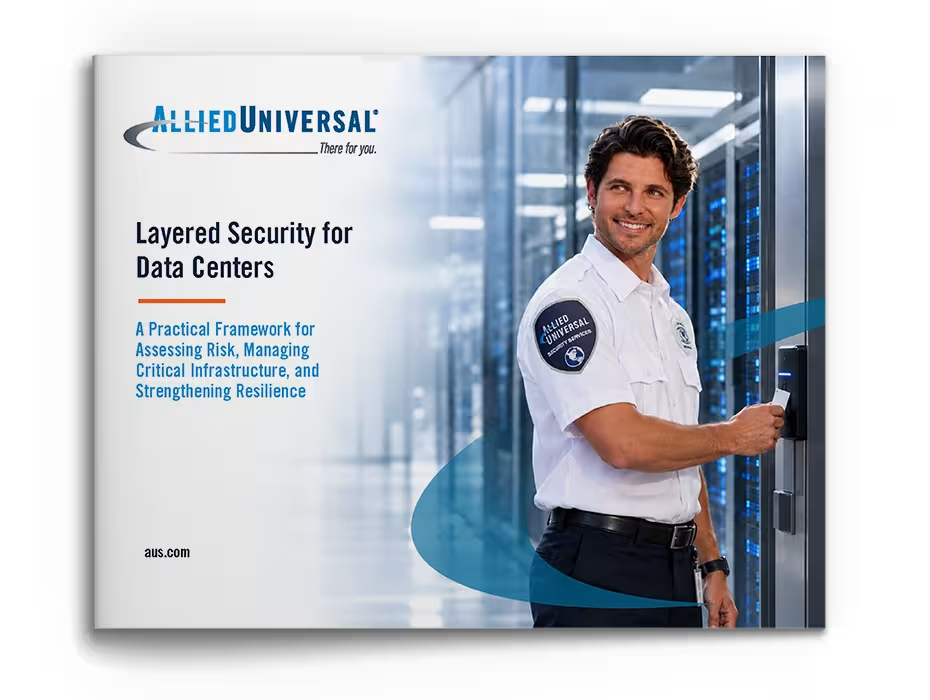
Build a Layered View of Data Center Risk
Data center continuity extends beyond the server hall. This guide helps security leaders examine five layers of risk:
Use the framework to strengthen security planning and support continuity.
Download the A Layered Security Model for Data Centers and Supporting Infrastructure eBook
What’s in the Guide:
Understand the Changing Data Center Environment

Map Critical Assets and Key Dependencies
Assess Threats and Prioritize Mitigation Measures
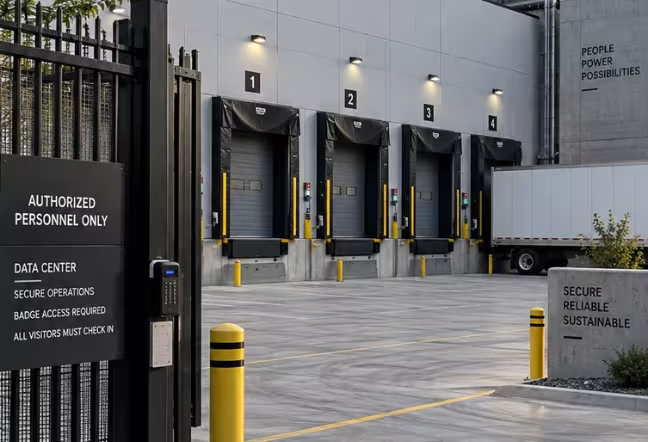
Apply the Five-Layer Security Model
Who’s The Guide For:
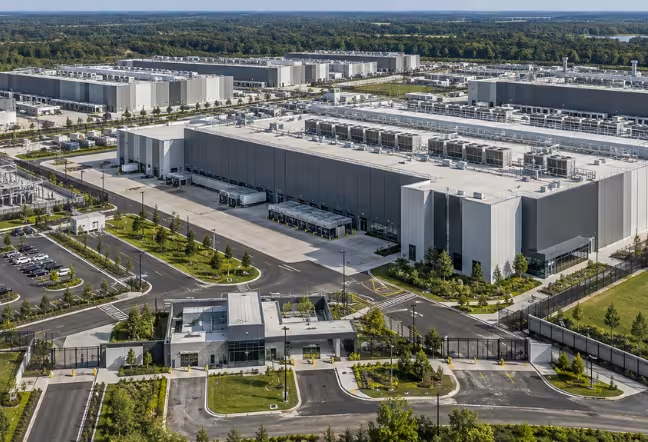
Use the guide to frame data center security around critical functions, assets, dependencies, credible threats, and residual risk. The five-layer model helps organize decisions from the surrounding environment through critical compute areas, while also accounting for enterprise systems and external services. It can support site-specific risk assessment, program design, governance, and investment discussions across a complex operating environment.
Apply a structured model to examine where physical access, personnel activity, operational technology, utilities, and external services intersect. The guide helps security leaders map what matters at each layer, identify credible events that could disrupt operations, and evaluate whether current safeguards, response capabilities, continuity measures, and recovery plans are proportionate to the assets and dependencies involved.
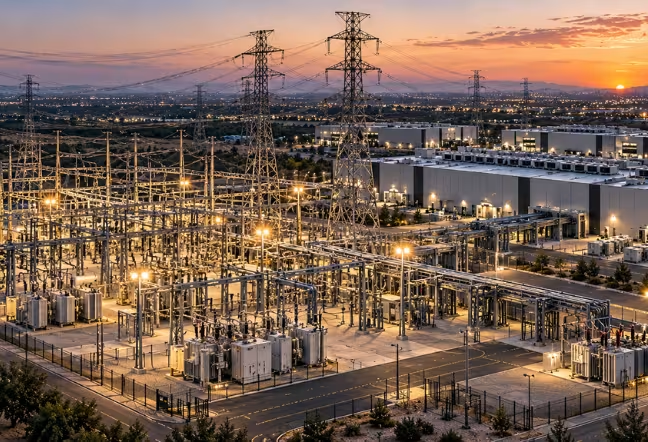
Review the security implications of power, cooling, generators, fuel systems, mechanical spaces, control systems, deliveries, maintenance activity, and other operational dependencies. The guide connects facility assets with threat and hazard scenarios so cross-functional teams can identify where responsibilities change, where one system depends on another, and where disruption may affect several functions at once during normal operations and disruption.
Use the framework to connect security risk with continuity and recovery planning. The guide emphasizes asset criticality, dependency mapping, credible threat and hazard assessment, residual risk, response capability, and restoration of critical functions. It also highlights external services and enterprise dependencies that can affect multiple facilities, helping teams broaden assessment beyond the building boundary during planning and response.
Related Resources
Delivering Integrated Security Systems for a National Data Center Operator
The Value of Security eBook