Contact Us


Executive Protection: A Thinker’s Game
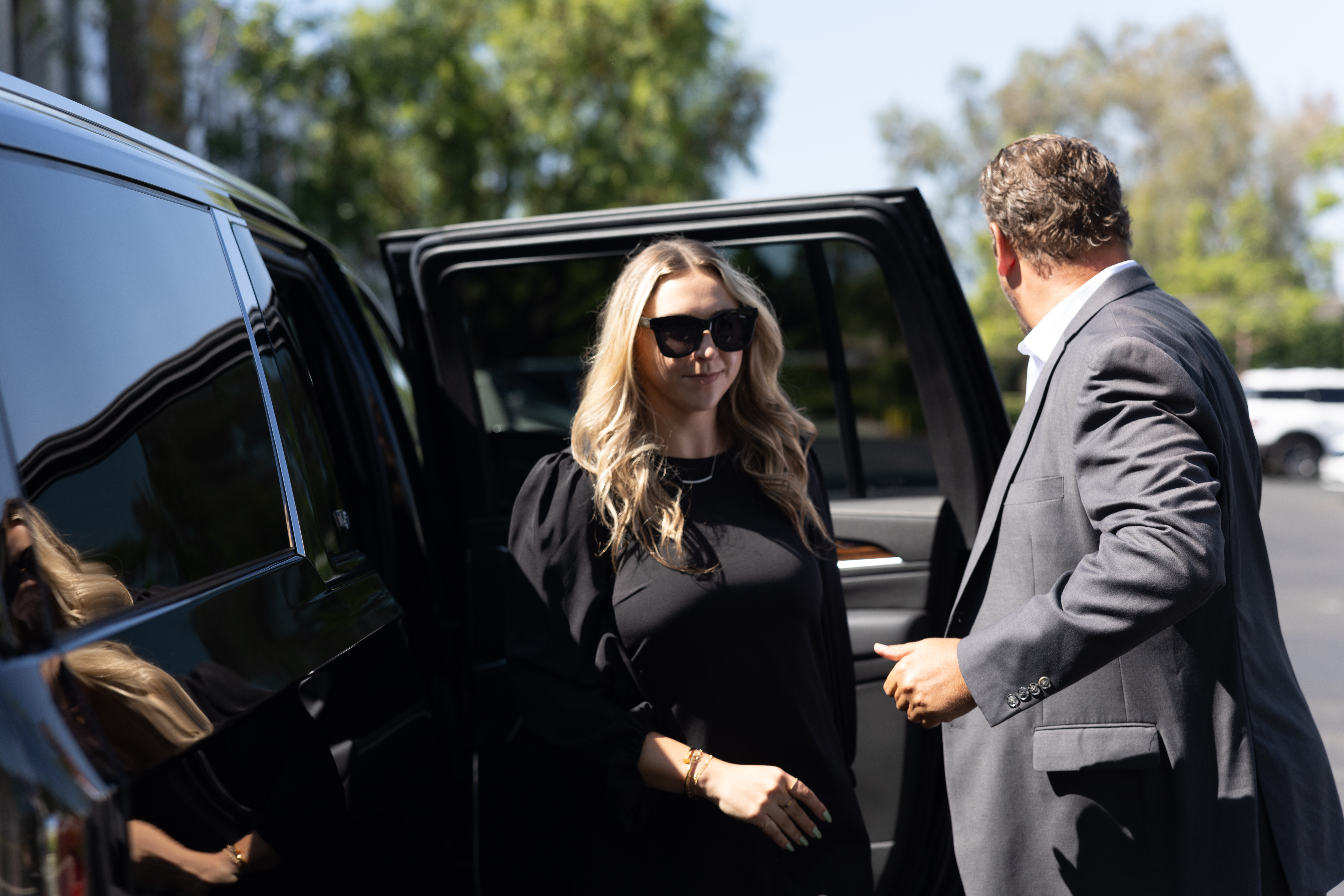
When an executive protection program is successful, principals rarely notice it. They move efficiently, make meetings, and maintain focus on their core responsibilities. This outcome is not accidental. Executive protection is built around preparation, judgment, and adaptability.
The goal of a strong EP program is not simply to react to problems. It is to identify risks early, make informed decisions, and help principals move through their day with as little friction as possible. Strong executive protection programs extend across a broad risk ecosystem to connect planning with action.
Programs that still place the highest value on a visible presence are behind the threat environment. Agents need to understand how intelligence, advance work, logistics, and discretion coexist to support mobility and privacy in every domain. That is why executive protection can be described as “a thinker’s game.” Protective intelligence and grounded judgment give teams an edge that a purely physical presence cannot match.
What does it take to deploy a successful Executive Protection program?
With new threats emerging in different forms, Executive Protection agents cannot be singularly focused. Agents must be trained to operate across multiple functions and operational environments.
A principal’s risk landscape may change by destination, event type, public profile, online exposure, or regional conditions. Training should prepare agents to synthesize those challenges and adjust posture without unnecessary visibility or rigid protocols.
The goal is to build professionals who can support a risk-informed plan, understand the principal’s preferences, and make disciplined decisions when information is in flux or ground conditions change suddenly. Strong executive protection programs balance protection, access, efficiency, and executive preference. The objective is not only to reduce risk and provide physical protection, but also to provide operational continuity to help principals focus on the work that matters most.
What skills must executive protection agents bring to every assignment?
A complete Executive Protection program requires agents with technical skills, professional discipline, and sound decision-making capacity under pressure. While programs vary based on the principal, environment, resources and mission requirements, most comprehensive executive protection training includes several core areas:
- Protective intelligence and threat assessment training: converting risk information into operational decisions
- Advance work and site assessment: route planning, evaluating the environment to establish a baseline, access points, and contingency options
- Secure transportation and protective driving: supporting route planning, vehicle positioning, and movement discipline
- Routine & Emergency medical response: Addressing simple injuries & ailments … addressing trauma, sudden illness, and time-sensitive concerns until advanced care is available
- Professional Communication: The ability to communicate effectively and efficiently with stakeholders via all needed avenues
- Lawful use-of-force decision-making: reinforcing restraint, proportionality, and legally grounded judgment in a manner that mitigtes risks and threats but doesn’t harm the brand of a principal.
- Surveillance detection and countermeasures: recognizing hostile surveillance, pre-attack indicators unusual patterns and unwanted attention
- Professional discretion: supporting confidentiality, cultural awareness, and low-friction service
The point is not to make every agent interchangeable. It is to build a team with shared standards, cross-functional awareness, and enough range to successfully adapt.
How do agents prepare for the realities of a live executive protection deployment?

Realistic training reveals whether agents can apply standards under pressure, as exemplified by Allied Universal's Enhanced Protection Services Executive Protection Training Academy (EPT-201). To simulate real-world executive protection operations, agents receive instruction and participate in practical exercises covering EP best practices over the span of five days. Training includes walking coverage, arrival and departure procedures, executive driving, advance work, and more, all designed to prepare agents to plan and execute a mock principal’s itinerary. On the sixth and final day, role players portray the principal, executive staff, venue contacts, or persons of interest (POIs), while agents provide coverage throughout the operation responding to challenging audibles and real-world stressors.
The emphasis of the training is on balancing proactive soft skills and reactive hard skills with the emphasis on remaining "left of bang" and staying ahead of potential contingencies.
Enhanced Protection Services' scenario-based training exercises challenge agents through extensive mission planning, sound protective intelligence, detailed advance work, and effective stress inoculation prior to a live assignment, leaving them well equipped both physically and mentally to conduct protective operations for a principal.
Once deployed in the field, regular sustainment training keeps skills aligned as threats, technology, and legal considerations evolve.
How does advance work and intelligence strengthen Executive Protection programs?
Advance work turns planning into operational clarity. It helps teams identify where movement may slow, where exposure may increase, and where coordination is needed before the principal arrives.
It can also create measurable business value. In one real world example, agents' pre-planning helped create significant time savings for a CEO through coordination and logistical preparation. The work included advance packets for frequented locations, road construction checks, business-hour confirmations, and refined commute times between meetings.
Protective intelligence adds broader context to planning through open-source research, social media monitoring, travel risk information, public sentiment, or risks tied to a location or principal. The key to valuable intelligence is usability. A focused intel briefing can shape timing, staffing, route planning, venue coordination, or contingency planning.
The strongest Executive Protection model is collaborative: intelligence analysts provide context while agents provide ground truth from the field. Together, they create a feedback loop that supports stronger security risk management. Intelligence drives operations.
What distinguishes a high-performing executive protection agent?
Adaptability is at the core of success for every executive protection agent. It is the difference between following a plan and managing the moment.
Agents must know when to maintain line of sight with the principal, adjust their proximity, move location, hold, communicate, elevate a concern, or solve a problem quietly. That requires emotional intelligence, discretion, cultural fit, and sound judgment, not just a tactical background.
The strongest agents understand that executive protection is not one task. It is a coordinated service that supports protection and productivity at the same time.
Executive protection training is the foundation of program quality. Well-trained agents help reduce uncertainty and support informed decisions. They help support a principal’s time, privacy, reputation, continuity, and productivity. The most effective programs are measured not only by their ability to mitigate risks, but by how effectively they enable principals to conduct business and focus on their responsibilities with minimal disruption.
About the Expert:

Ryan Fresn serves as Vice President of Executive Protection Services for Allied Universal® Enhanced Protection Services, where he leads strategy and operations for Embedded Operations, Global Special Services, and the Training Operations Group. He works closely with leadership teams to support the delivery of executive protection programs and help ensure the organization is equipped to meet client needs while fostering a strong culture for employees.
Ryan brings more than 30 years of experience across the military, law enforcement, security, and training sectors. A significant portion of his career has been dedicated to executive protection, including the management of high-profile security programs for corporations, family offices, and ultra-high-net-worth individuals and their families. His background includes service as a U.S. Marine, a Reserve Sheriff's Deputy in Central Washington, an anti-terrorism and security trainer for the U.S. Navy, and a Protective Security Specialist supporting the U.S. Army Corps of Engineers and U.S. Department of State in Iraq. Ryan has been with Allied Universal® Enhanced Protection Services (formerly AS Solution North America, Inc.) since 2008. Ryan holds a Bachelor of Science in Police Science from Central Washington University.
Related Resources
-
Image

-
Image
-
Image